


Aug
news
The 2026 Ultimate Guide to Filling Machines and Equipment in Singapore: Types, Costs, Specs, and Vendor Comparisons
Why Filling Machines Matter to Singapore Manufacturers
The role of filling machines in modern production lines
Filling machines and equipment are the backbone of any high-throughput production line, ensuring consistent fill volumes, minimising product waste, and keeping operations running at pace. In Singapore’s competitive manufacturing landscape, even a small improvement in filling accuracy can translate directly into cost savings and improved product quality. Whether you are filling 200-litre drums, 20-litre pails, or 5-litre jerrycans, the right filling machine determines your overall line efficiency.
Key industries in Singapore that rely on liquid filling equipment
Singapore’s manufacturing sector spans a wide range of industries that depend heavily on reliable filling machines and equipment, including petrochemical, paints and coatings, food and beverage, pharmaceutical, agricultural, and specialty chemicals. Companies such as Shell, Nippon Paint, Valspar, and PPG operate locally and require robust, high-accuracy filling systems to meet both domestic and export demands. For these industries, unplanned downtime or inaccurate fills is not just a productivity issue, but it is a compliance and profitability risk.
Common challenges with outdated or manual filling processes
Manual or semi-automated filling processes are prone to operator variability, product spillage, and inconsistent fill weights that can result in failed quality audits. As production volumes increase, the limitations of manual processes become even more pronounced, with rising labour costs and increasing regulatory scrutiny adding further pressure. Upgrading to the right filling machines and equipment in Singapore is no longer optional for manufacturers looking to scale sustainably.
Overview of Filling Machine Types Used in Singapore
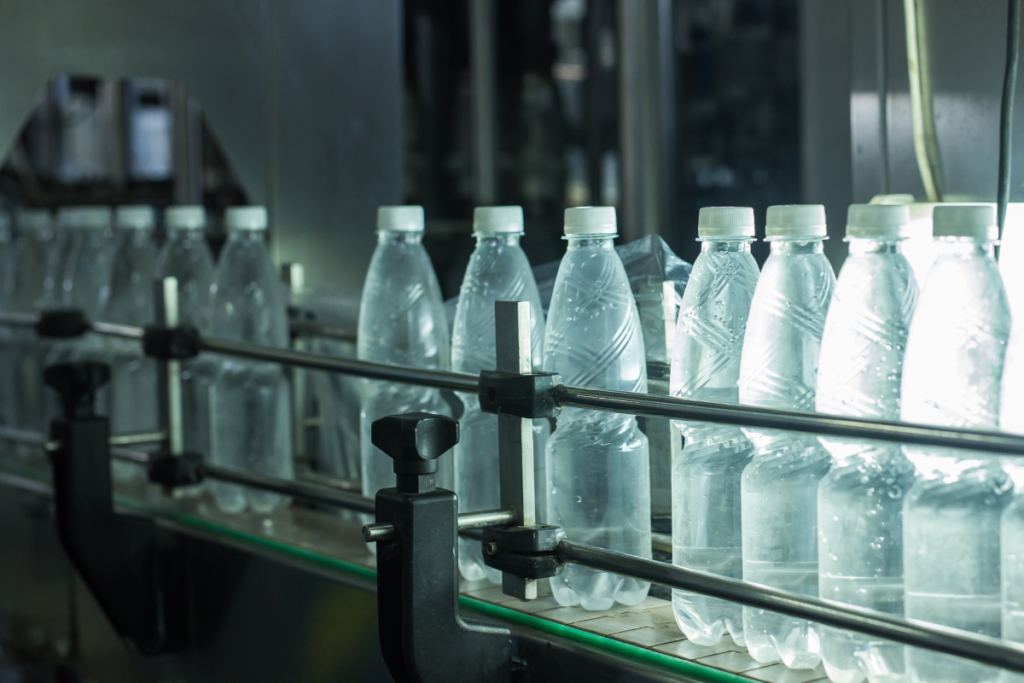
Table-top and benchtop liquid filling machines
Table-top and benchtop filling machines are entry-level solutions designed for small-batch production or laboratory environments where space is limited. They are typically used for filling small containers such as bottles or vials and are suited to operations that do not yet require full automation. These machines offer a low capital entry point while still delivering consistent fill volumes compared to purely manual methods.
Semi-automatic filling machines (pneumatic, volumetric, gravity)
Semi-automatic filling machines are widely used in Singapore across paint, lubricant, and food production facilities where operators control the filling cycle but the machine manages the dispensing. Pneumatic fillers use compressed air to drive product through nozzles, volumetric fillers dispense a pre-set volume per cycle, and gravity fillers rely on the natural flow of free-flowing liquids. These systems strike a balance between affordability and throughput, making them a popular choice for mid-sized manufacturers.
Fully automatic in-line and rotary liquid filling machines
Fully automatic in-line filling machines, such as AF AdvanTech’s Auto Inline 4, 6, and 8 Nozzle Weight Fillers, are designed for continuous, high-speed production with minimal operator intervention. Rotary filling systems take automation further by indexing containers around a carousel, achieving even higher throughput rates suited to large-scale operations. Both configurations integrate with conveyors, capping, and labelling systems to form complete packaging lines.
Specialised systems: drum, tote, pail, can, and IBC filling
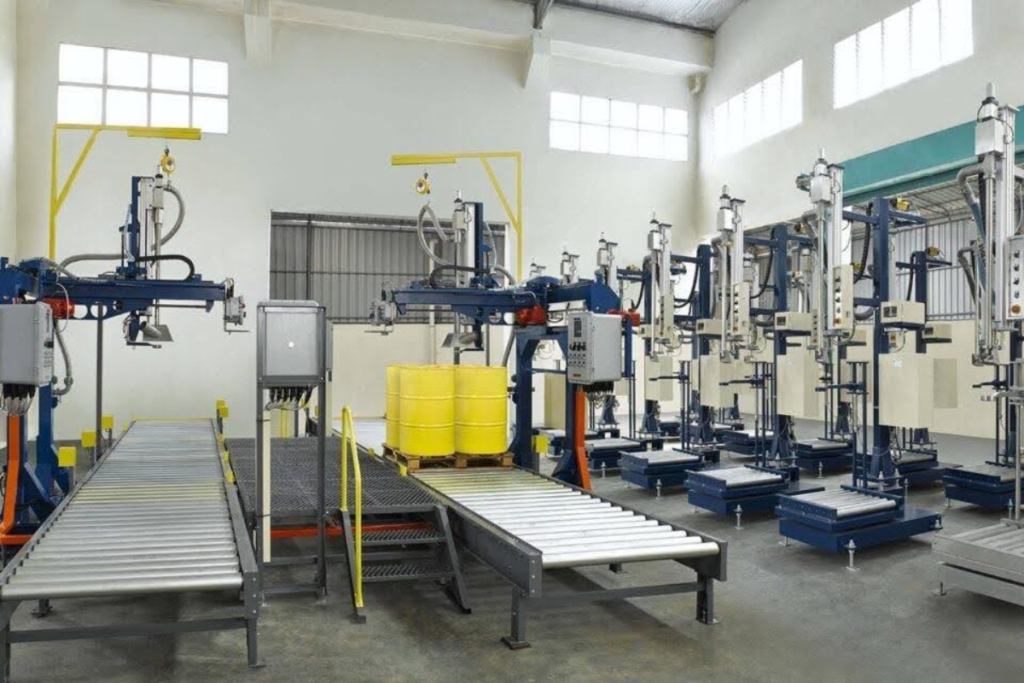
For heavy industrial applications involving large containers, specialised drum fillers, IBC filling systems, pail fillers, and jerrycan filling machines are required to handle both the weight and volume demands of these formats. AF AdvanTech’s range includes semi-automatic and fully automatic drum and IBC fillers, as well as pail and jerrycan filling machines that support industries such as petrochemical and coatings. These systems are built to handle high-viscosity products and are available in explosion-proof (Ex-Proof) configurations for hazardous environments.
Aseptic and hygienic filling machines for food, beverage, and pharma
Food, beverage, and pharmaceutical manufacturers in Singapore require filling equipment that meets strict hygiene and cleanliness standards, including smooth internal surfaces, CIP (Clean-in-Place) compatibility, and food-grade materials. Aseptic filling systems additionally prevent microbial contamination by operating in a sterile environment, which is critical for products with long shelf lives. When selecting filling machines and equipment in Singapore for these sectors, compliance with FDA, NSF, or local AVA standards is a non-negotiable requirement.
How to Choose the Right Filling Machine for Your Application
Matching machine type to product characteristics (viscosity, foaming, particulates)
The physical properties of your product are the most critical factor in selecting the appropriate filling machine, as a low-viscosity water-based product behaves very differently from a high-viscosity paste, gel, or resin. Foaming products require slow-fill or bottom-up nozzle designs to minimise air entrapment, while products with particulates or fibres need larger bore nozzles and check valves that do not clog. Specifying these characteristics clearly when consulting a vendor like AF AdvanTech ensures you receive a system designed to handle your exact product.
Batch size, SKUs, and throughput targets
A manufacturer producing a single SKU at high volume has very different needs from one running multiple SKUs with frequent changeovers. Fully automatic systems offer higher throughput but require longer changeover times and additional change parts for different container formats, whereas semi-automatic systems offer more flexibility for multi-SKU operations. Defining your target containers per hour and your number of active SKUs upfront will help narrow down the right level of automation.
Container types: drums, pails, jerrycans, bottles, cans, IBCs
The container format you are filling into drives both the machine type and the feeding mechanism required, as drums and IBCs require floor-level or top-fill configurations, while pails and bottles are typically filled on conveyor-fed systems. Multi-format operations may benefit from modular filling systems where nozzles and guides can be adjusted quickly between runs. AF AdvanTech’s product range covers all major container formats used in Singapore’s industrial and consumer packaging industries.
Accuracy requirements and regulatory constraints
Net-weight accuracy requirements vary significantly by industry, with pharmaceutical and food manufacturers typically requiring fill accuracies of ±0.1% or better, while chemical and industrial products may accept tolerances of ±0.5%. Regulatory frameworks such as Singapore’s Weights and Measures Act and sector-specific standards define minimum accuracy thresholds that must be met by certified filling equipment. Choosing a machine with built-in load cell technology and auto-zero calibration ensures ongoing compliance without manual recalibration.
Integration with existing conveyors, packaging, and automation
A filling machine does not operate in isolation; it must interface seamlessly with upstream and downstream equipment, including conveyors, cappers, labellers, and check weighers. AF AdvanTech offers complete line integration services, supplying not just filling machines but also conveyor systems, automatic capping systems, and auto labelling systems that are designed to work together. Ensuring PLC compatibility and communication protocol alignment between equipment is essential for achieving a fully synchronised production line.
Filling Technologies Explained: Volume, Weight, and Level
Volumetric filling: piston, peristaltic, and flowmeter systems
Volumetric filling technology dispenses a fixed volume of product per cycle, using mechanisms such as piston pumps, peristaltic pumps, or mass flowmeters to control the amount dispensed. Piston fillers are well-suited to thick, paste-like products, peristaltic pumps are ideal for sterile or corrosive liquids, and flowmeter-based systems offer high accuracy for free-flowing liquids across a wide range of container sizes. Volumetric systems are generally faster to set up but can be affected by changes in product temperature or density.
Net-weight filling and load cell-based solutions
Net-weight filling relies on load cells to weigh the product as it enters the container, stopping the fill cycle once the target weight is reached regardless of density variation. This method is particularly accurate for high-value products or those with fluctuating viscosity, and is the preferred approach for filling machines and equipment in Singapore used in the chemical and lubricant industries. AF AdvanTech’s Auto Inline Weight Fillers use load cell technology to deliver consistent fill weights across high-speed multi-nozzle operations.
Level filling and overflow technologies
Level filling ensures that every container is filled to the same visual height, making it a popular choice for clear containers in the consumer goods and cosmetics sectors where presentation consistency is important. Overflow filling, a variant of level filling, is particularly effective for thin, free-flowing liquids and ensures no overfill by recirculating excess product back to the supply tank. Both methods prioritise aesthetic consistency over absolute weight accuracy, which is acceptable in many non-regulated industries.
Pros and cons of each technology for different industries
Volumetric filling offers speed and simplicity but is less suitable where density variations are common, while net-weight filling is more accurate but requires load cell maintenance and calibration. Level filling is low cost and easy to operate but does not meet regulatory weight requirements for most industrial or food products. Understanding these trade-offs is essential when specifying filling machines and equipment in Singapore for your specific production environment.
How filling accuracy impacts product cost and compliance
Even a 1% overfill on a 200-litre drum of a high-value chemical product represents a significant giveaway in product cost across thousands of units per month. Persistent underfilling, on the other hand, exposes manufacturers to legal liability under Singapore’s consumer protection and trade measurement regulations. Investing in high-accuracy filling machines with real-time feedback and rejection systems is one of the most financially justifiable upgrades a Singapore manufacturer can make.
Cost Breakdown of Filling Machines in Singapore
CAPEX ranges by machine type and automation level
Entry-level benchtop and semi-automatic filling machines in Singapore typically range from SGD 5,000 to SGD 30,000, depending on the fill volume range and build quality. Fully automatic in-line filling systems, particularly multi-nozzle weight fillers for drums, pails, or bottles, generally range from SGD 50,000 to SGD 200,000 or more depending on throughput, integration requirements, and materials of construction. Specialised systems such as explosion-proof drum fillers or hygienic stainless steel configurations for food and pharma will command a premium due to the additional engineering requirements.
Hidden costs: utilities, change parts, installation, and commissioning
Beyond the machine purchase price, buyers should budget for compressed air supply and electrical infrastructure upgrades, which can add 10 to 20% to total project cost. Change parts for different container formats, nozzle sets, and guides are often quoted separately and can represent a significant ongoing investment for multi-format operations. Professional installation and commissioning by a qualified vendor like AF AdvanTech is essential to ensure the machine performs to specification from day one.
OPEX considerations: labour, consumables, maintenance, downtime
Semi-automatic filling machines still require a dedicated operator per shift, which adds ongoing labour costs that should be factored into the total cost of ownership. Fully automatic systems reduce headcount requirements but introduce higher maintenance costs associated with servo motors, sensors, and control systems. Establishing a preventive maintenance contract with your equipment supplier is one of the most effective ways to minimise unplanned downtime and extend machine lifespan.
Calculating ROI and payback period vs manual or semi-auto filling
The ROI case for automating a filling line in Singapore typically rests on three pillars: reduced labour costs, improved fill accuracy leading to less product giveaway, and higher throughput enabling increased output without additional headcount. A manufacturer filling 500 drums per day manually might achieve payback on a fully automatic system within 12 to 18 months when all savings are quantified. AF AdvanTech provides free consultations to help manufacturers model their ROI based on their specific production volumes and product values.
Financing options, leasing models, and government grants
Singapore manufacturers may be eligible for government support under schemes such as the Enterprise Development Grant (EDG) administered by Enterprise Singapore, which co-funds productivity and automation investments. Leasing or hire-purchase arrangements are also available through some equipment vendors and local financial institutions, reducing the upfront capital requirement for SMEs. It is advisable to consult with your equipment vendor and your finance team early in the project to explore all available funding pathways.
Filling Machines and Equipment Vendors in Singapore: Market Overview
Types of suppliers: OEMs, system integrators, and distributors
The filling machine vendor landscape in Singapore consists of original equipment manufacturers (OEMs) who design and build their own machines, system integrators who source and assemble equipment from multiple suppliers into a complete line, and distributors who represent overseas OEM brands locally. Each model has its merits, though buyers should evaluate each supplier’s ability to provide local after-sales support, spare parts, and technical service. A vendor that can both supply and service equipment in Singapore is often a lower-risk choice for critical production applications.
Snapshot of Singapore’s key filling machine vendors and brands
AF AdvanTech is one of Singapore’s established local OEMs with over 32 years of experience designing and manufacturing filling and packaging machines for petrochemical, chemical, paints, oils, food, pharmaceutical, and agricultural sectors. The company serves a wide installed base that includes global names such as Shell, Valspar, Nippon Paint, KCC Paint, PPG, and Vopak, demonstrating deep credibility across multiple high-demand industries. With in-house engineering capabilities and a local factory, AF AdvanTech is well-positioned to provide customised system design, turnkey project management, and responsive after-sales maintenance support.
How overseas OEMs typically sell into the Singapore market
Overseas OEMs from Europe, the United States, or China often sell into Singapore through local distributors or agents who handle sales, basic commissioning, and warranty claims on their behalf. While these machines may offer competitive pricing or specific technology advantages, buyers should assess the distributor’s technical depth and spare parts inventory before committing to a purchase. Relying on an overseas principal for service support can result in extended downtime if critical parts need to be air-freighted from abroad.
When to choose a local integrator vs direct-from-OEM
A local system integrator is typically the right choice when you need to combine filling equipment with conveyors, capping, labelling, and palletising into a single turnkey line, as they take responsibility for overall system performance. Purchasing direct from a local OEM like AF AdvanTech offers the additional advantage of custom-built machines designed specifically for your product and container format, with the engineering team and factory support available onshore. The key consideration is whether your primary need is a standard machine at the lowest price or a complete solution with long-term local support.
Vendor Comparison Checklist and Evaluation Framework
Technical criteria: build quality, materials, certifications
When evaluating filling machines and equipment in Singapore, assess the grade of stainless steel used in product-contact parts, the quality of seals and valves, and the overall build robustness for your operating environment. Machines intended for food, pharmaceutical, or hazardous chemical applications should comply with relevant material certifications such as FDA 21 CFR, ATEX, or local BCA/MOM requirements. Request full technical datasheets and material certificates from shortlisted vendors before making a final decision.
Automation and control platforms (PLC, HMI, communication protocols)
Modern filling machines should be equipped with a reputable PLC platform (such as Siemens, Allen-Bradley, or Omron) paired with a clear, operator-friendly HMI touchscreen for ease of operation. Communication protocols such as Ethernet/IP or Profibus enable integration with plant-level SCADA or MES systems for real-time production monitoring. Ensure your chosen vendor can support the control platform used in the rest of your facility to simplify maintenance and spare parts management.
After-sales support, spare parts, and local service response times
After-sales support is one of the most important and frequently underestimated factors in vendor selection, as a machine that cannot be serviced quickly represents a significant operational risk. AF AdvanTech provides both ad hoc and contract preventive maintenance services, with a local service team reachable at +65 6896 6380. Confirm that your vendor holds adequate spare parts inventory locally and can commit to a defined response time for breakdown service calls.
References, installed base, and case studies in your industry
A vendor with a strong installed base in your industry provides the most reliable indicator of how their equipment will perform in your specific application. Request references from customers in your sector and, where possible, arrange site visits to see the machines operating under real production conditions. AF AdvanTech’s client portfolio across petrochemical, coatings, and food industries serves as a tangible demonstration of proven performance across demanding environments.
Sample RFP/RFQ checklist for filling machines
When issuing a Request for Proposal or Quotation for filling machines and equipment in Singapore, include the following key specifications: product type and physical properties (viscosity, temperature, hazard class), container formats and fill volume ranges, target throughput in units per hour, required fill accuracy tolerance, integration requirements with existing line equipment, applicable certifications and material standards, and after-sales support expectations including spare parts lead times and service response commitments.
Implementation Roadmap: From Specification to Commissioning
Conducting a line audit and defining user requirements (URS)
The first step in any filling machine project is a thorough audit of your existing production line, covering current throughput, bottlenecks, container formats, and product characteristics. This information forms the foundation of a User Requirements Specification (URS), a document that clearly defines what the new system must achieve in terms of performance, safety, and compliance. A qualified vendor like AF AdvanTech can assist in developing the URS as part of their professional and customised system design service.
FAT, SAT, and validation steps for filling equipment
Factory Acceptance Testing (FAT) is conducted at the manufacturer’s facility to verify that the machine meets all specified requirements before shipment, while Site Acceptance Testing (SAT) confirms performance after installation at your facility. For regulated industries such as pharmaceutical and food manufacturing, an additional validation phase including Installation Qualification (IQ) and Operational Qualification (OQ) documentation may be required. Engaging a vendor with experience in regulated industries ensures that all validation documentation is prepared accurately and on schedule.
Training operators and maintenance teams
Operator and maintenance training is a critical but often underinvested step in any new equipment project. AF AdvanTech includes training on operating, safety, and proper maintenance as part of their sales service, ensuring that your team is fully equipped to run and care for the equipment from day one. Well-trained operators are the single most effective safeguard against premature wear, incorrect settings, and avoidable breakdowns.
Monitoring performance post-installation (OEE, defects, rework)
Once your filling machine is commissioned, establishing a baseline for Overall Equipment Effectiveness (OEE) allows you to monitor availability, performance rate, and quality over time. Tracking fill weight defects and rework rates provides early warning of calibration drift or component wear before it escalates into a major issue. AF AdvanTech’s preventive maintenance contracts include inspection protocols and maintenance reporting to help you maintain optimal machine performance throughout its operational life.
Ready to Find the Right Filling Machine for Your Production Line? Talk to AF AdvanTech Today.
Choosing the right filling machines and equipment in Singapore is a decision that impacts your production efficiency, product quality, and regulatory compliance for years to come. With over 32 years of experience designing and manufacturing filling and packaging solutions for industries across petrochemical, coatings, food, pharmaceutical, and more, AF AdvanTech is Singapore’s trusted partner for complete auto-filling solutions.
Whether you are looking for a semi-automatic drum filler, a fully automatic in-line weight filling system, or a complete turnkey packaging line, our engineering team is ready to help you specify, design, and commission the right solution for your application. Contact us today at +65 6896 6380 or email sales@afadvantech.com.sg to schedule your free consultation.
Frequently Asked Questions About Filling Machines in Singapore
What is the typical lead time for new filling equipment in Singapore?
Lead times for standard semi-automatic filling machines in Singapore are typically four to eight weeks from order confirmation, while fully automatic or customised systems can take 10 to 20 weeks depending on engineering complexity and component sourcing. As a local OEM, AF AdvanTech is well-positioned to offer shorter lead times compared to overseas suppliers, particularly for machines that can be adapted from proven standard designs. We recommend initiating your enquiry and specification process as early as possible to avoid production delays.
How do I know if I should upgrade from semi-auto to fully automatic?
The key indicators that it is time to upgrade include consistently high labour costs relative to output, recurring fill inaccuracy issues, production volumes that exceed the practical throughput of your current semi-automatic system, or new customer contracts that require faster turnaround and documented quality assurance. A fully automatic system also becomes more justifiable when you are running multiple shifts and cannot sustain the required operator headcount cost-effectively. AF AdvanTech offers free consultations to help you assess your current setup and model the financial case for upgrading.
What standards and certifications should I look for in filling machines?
For chemical and petrochemical applications, look for machines built to ATEX or IECEx standards for use in explosive atmospheres, along with stainless steel grades compliant with relevant chemical resistance requirements. Food and pharmaceutical filling equipment should comply with hygiene standards such as EHEDG or 3-A Sanitary Standards, and all product-contact materials should be FDA 21 CFR-compliant. In Singapore, equipment used in regulated industries may also need to comply with requirements set by the Health Sciences Authority (HSA) or the Singapore Food Agency (SFA), so confirming these requirements with your regulatory team before purchase is strongly advised.
